24/10/2007

Five simple steps to designing grid systems

Part 1
Posted on: July 04, 2005 In: Design, Simple Steps, Typography

The first part of this Five Simple Steps series is taking some of the points discussed in the preface and putting it to practice.
Ratios are at the core of any well designed grid system. Sometimes those ratios are rational, such as 1:2 or 2:3, others are irrational such as the 1:1.414 (the proportion of A4). This first part is about how to combine those ratios to create simple, balanced grids which in turn will help you create harmonious compositions.

Starting with a blank canvas
It's always easier in these kinds of tutorials to put the example in context, in some kind of real world scenario. So, this is it. You've got to design a programme for a gallery exhibition. You know you want the size to be A4. You also know that there are going to be photographs and text, and the photographs will be of varying size. There you have it - your blank canvas.

Subdividing ratios
The grid system we are going to design is a simple symmetrical grid based on a continuous division of the paper size in the ratio 1:1414. Using the paper size as a guide we can retain the proportion throughout the grid, this will give our elements within the design a relationship to one another, the grid and the paper size.

This is one of the easiest ways to create a balanced grid. By using the size of the paper as a guide we can divide using that ratio to begin creating the grid. You can see this through diagrams 1 - 6 that we begin by simply layering division upon division to slowly build up the grid. [Ler mais...]


Diagrams kindly updated by Michael Spence

(...) [Ler mais...]

Short but sweet
A simple step to begin with. Next we'll go onto to more complex ratios, such as the Golden Section, and combining multiple ratios across spreads instead of single pages.
The series
This is the first installment of this "Simple Steps..." series.
Subdividing ratios
Ratios and complex grid systems
Grid systems for web design: Part 1
Grid systems for web design: Part 2 Fixed
Grid systems for web design: Part 3 Fluid

...

10/10/2007

La dimensión de las artes visuales

Caligrafía Celta
Por Fabián Sanguinetti

Sin que parezca demasiado increíble se podría sostener que el arte caligráfico como se lo concibe en la actualidad comenzó hace unos 1400 años con los primitivos manuscritos irlandeses. Éstos fueron producto de la asimilación de la derrotada civilización celta por el régimen monástico cristiano imperante en Irlanda hacia el siglo V.De estos manuscritos, particularmente dos de ellos —el Libro de Durrow y el Libro de Kells1— sobresalen como hitos por su alta elaboración artística. El primero se remonta a los orígenes del florecimiento del arte cristiano irlandés, hacia fines del siglo VII, y el segundo a la época en que ese arte había alcanzado su máxima plenitud, hacia fines del siglo VIII. Las características de ambos son claramente diferentes de las expresiones de otras culturas posteriores. Y, paradójicamente, estas características que distinguen a estos dos libros de evangelios de otros más cercanos a nuestra época son lo que más los aproxima a los principios artísticos del arte contemporáneo.

Carácter Tipográfico • De, para y por la tipografía

08/10/2007

Typographie & Civilisation

Bienvenue sur le site Typographie & Civilisation, consacré à l’histoire de l’écriture, de l’imprimerie et des caractères typographiques (...)


> Alphabet & typographie
“Les caractères ne révèlent leurs secrets et partant, leurs beautés qu’à ceux qui les regardent attentivement.”
Jérôme Peignot

> Histoire de l'écriture

> Histoire de l'imprimerie

> Histoire des caractères

> Dossiers typographiques
"Au cours des siècles, les professionnels de la typographie ont développé des terminologies différentes pour désigner les mêmes phénomènes typographiques." Geert Setola & Joep Pohlen


[Ler mais...]

© 2006 Typographie & Civilisation Licence d’utilisation Planète typographie

07/10/2007

Guia de Tipos

Guia de Tipos

Episteme clásica y evolución de la tipografía en el Barroco

Por Alejandra Perié, 04 de Marzo de 2007


C. Episteme clásica y evolución de la tipografía en el Barroco

En el mismo momento en que el sistema de signos en el mundo occidental pasa de ser ternario a binario–lo que sucede en la transición a la época clásica-, en el mismo momento en que aparece la pregunta, hasta entonces inexistente, acerca del modo en que un signo se halla ligado a lo que significa, la representación en tipografía sufre una discontinuidad. Deberíamos preguntarnos si la tipografía pasa de ser “respeto hacia una autoridad invisible y mágica” a ser “respeto a la autoridad monárquica”, como sucede por ejemplo en la pintura. Si pasa de ser “mero reflejo del mundo” a ser “reflexión sobre lo representado”, incorporando así en su propia disciplina, la tarea del análisis del problema de la representación. Toda la época clásica se concentrará en comprender el enlace de signo y significado por medio del análisis de la representación; la cuestión es saber si el ámbito de la tipografía presenta sus propios interrogantes a partir de las prácticas mismas. Dicho de otro modo: mientras el pensamiento moderno se formula a partir del análisis del sentido y de la significación, la tipografía ¿enuncia sus preguntas específicas?. [Ler mais...]

(...)


(s.XVI Renacimiento. Circularidad mágica: tipos de Paccioli)


> Carácter Tipográfico • De, para y por la tipografía
www.caractertipografico.com.ar © 2007
...

06/10/2007

Lecturas históricas en torno a la tipografía

Por Alejandra Perié, 19 de Junio de 2006

Introducción1 a las Lecturas. Cómo seguir las partes que componen estas lecturas.

La historia que se hace habitualmente de la tipografía parece estar cada vez más centrada en la descripción minuciosa y anecdótica de hechos específicos del campo tipográfico en su progreso aparentemente lineal y objetivo. Por el contrario, no parece dedicarse con atención al análisis del modo en que tales hechos forman parte y se registran en el marco general de las discontinuidades más estudiadas y discutidas de la cultura occidental. Esta posición habitual para considerar la evolución de la tipografía a través de la historia, contribuye gracias a su minuciosidad, al anecdotario y al folklore de la tipografía y el diseño gráfico en cuanto disciplina. No obstante, poco aporta para sacar a la luz las razones fundamentales que han hecho posibles las diversas formas de acción y conocimiento tipográficos; y mucho menos, aporta en el de los lazos fundamentales entre este mundo específico de la letra impresa y otros aspectos más generales de la evolución y de las discontinuidades de la historia occidental.
El conjunto de lecturas que proponemos en esta sección, están destinadas a revisar en qué contexto aparecen las formas tipográficas y de qué manera son ellas un emergente o tal vez el medio que permite la construcción de una configuración de mundo determinada. Dichas lecturas partirán de un enfoque, en alguna medida “arqueológico”, que pretende poner de manifiesto cómo las discontinuidades en los diversos tipos de saber de la cultura occidental no son ajenas al curso de la evolución de la letra impresa, y posiblemente constituyan una herramienta teórica imprescindible para comprender los cambios presentes y futuros de la misma.

Lectura I. Parte A. Parte B. Parte C.
Lectura II.
Lectura III.
Lectura IV.

Lectura I. Formaciones históricas y discontinuidades epistémicas. El caso de la tipografía.

Procesos históricos generales en los que se inscribe la historia de la tipografía. Reconstrucción de un armazón cronológico y conceptual de los segmentos de historiografía moderna que hacen a una mejor comprensión de la letra impresa. Tipografía y epistemes, de la «semejanza» y «clásica», Renacimiento y Barroco.


A. La discontinuidad foucaultiana. Un aspecto importante para comprender tipografía en una dimensión histórica.

Desearíamos retomar, algunos aspectos del enfoque arqueológico que permite a Michel Foucault marcar la discontinuidad en la episteme de la cultura occidental: aquella con la que se inaugura la época clásica hacia mediados del siglo XVII. ¿Cuáles son las notas distintivas de tal discontinuidad?, ¿en qué modo ella afecta al ámbito de la tipografía?, ¿de qué manera tal discontinuidad contribuye a que la tipografía adquiera grados de independencia y autonomía disciplinares?.
Interesa fundamentalmente observar cómo la tipografía –al igual que otros aspectos de la cultura- del siglo XVII- fue capaz de liberarse de los órdenes empíricos que dictaminaban sus códigos primarios y ha instaurado una distancia en relación a ellos al perder su transparencia inicial. La representación pareciera comenzar un proceso que la desprende de aquellos poderes inmediatos e invisibles para incorporar un conjunto de reglas que inauguran un nuevo orden2. La lectura de Foucault intenta observar el modo en que la cultura puede experimentar la proximidad de las cosas a partir de la tabla de parentescos que establece el orden de acuerdo al cual es posible recorrerlas3. Retomar su historia de la semejanza servirá para relevar su discontinuidad en el propio siglo XVII.
Los interrogantes se vuelven más específicos porque apuntan al problema de la representación en el campo de la producción tipográfica: ¿En qué condiciones pudo reflexionar el pensamiento clásico las relaciones de similitud o de equivalencia entre las cosas que fundamentan y justifican los dispositivos de representación y representación tipográfica? [Ler mais...]

(...)

Imagen “Man of letters” (hombre de letras de Tory)


Notas de Lectura 1. Parte A:

1. Quisiera destacar que estas lecturas, son el producto de la elaboración de las clases que he dictado junto a Soledad Martínez en el año 2005, en el Diplomado en Diseño Tipográfico, Universidad Blas Pascal. Buena parte de las reflexiones que ahora propongo, han sido posibles gracias a las reflexiones que juntas pudimos construir en torno a la elaboración del programa y de las unidades.
2. Foucault Michel, Las palabras y las cosas, Siglo XXI, México, 1991, p.6.
3. Ibid., p.9. [Ler mais...]

> Carácter Tipográfico • De, para y por la tipografía • Reflexión, pensamento y experiencias.
http://www.caractertipografico.com.ar/ © 2007
...

05/10/2007

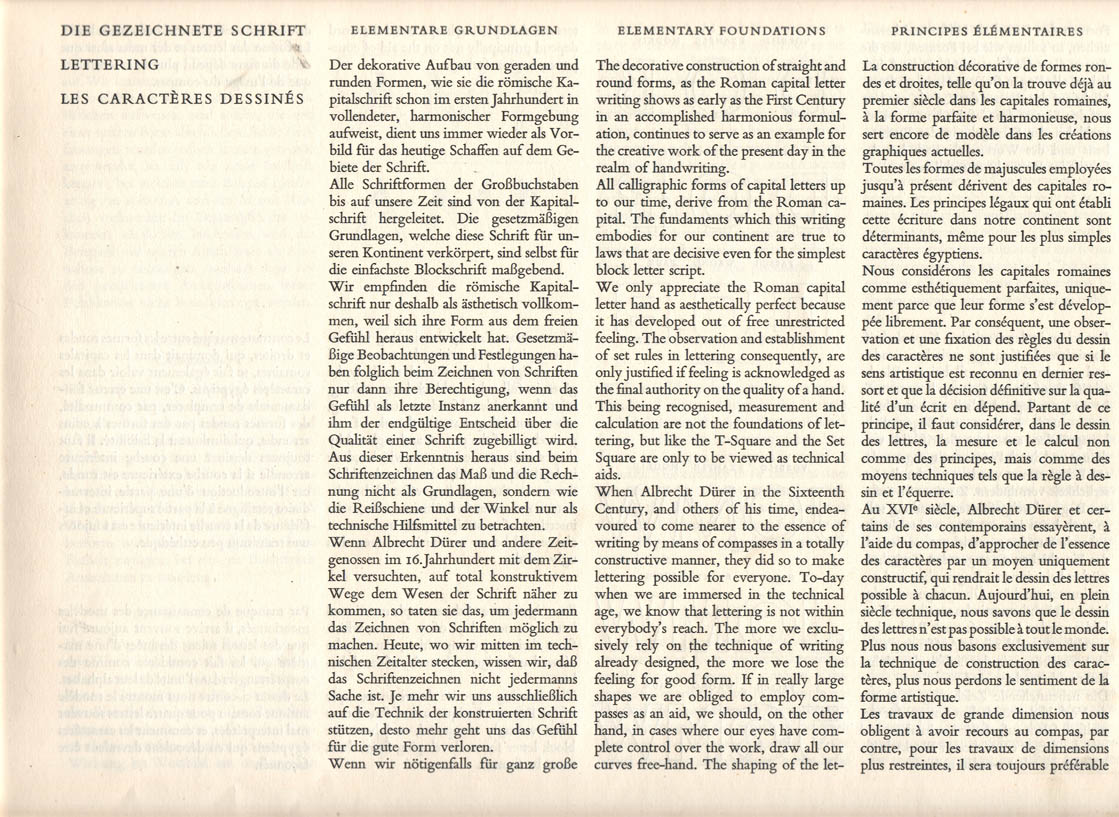
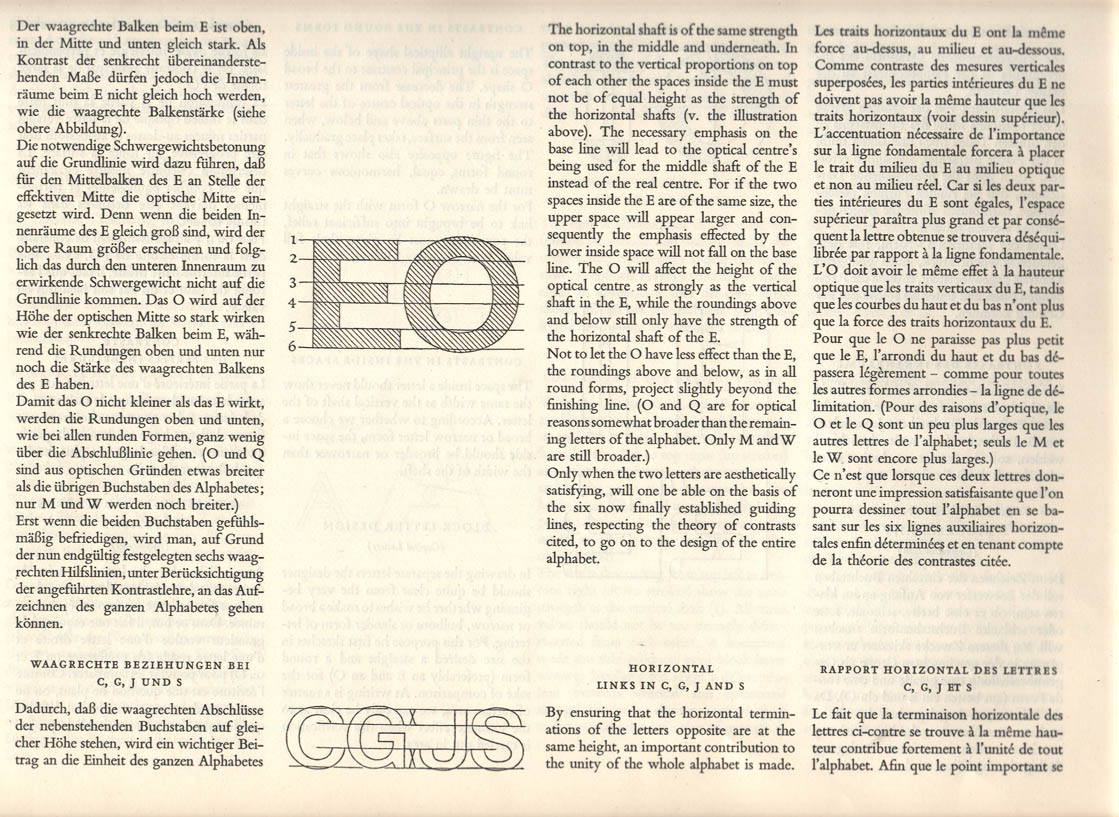
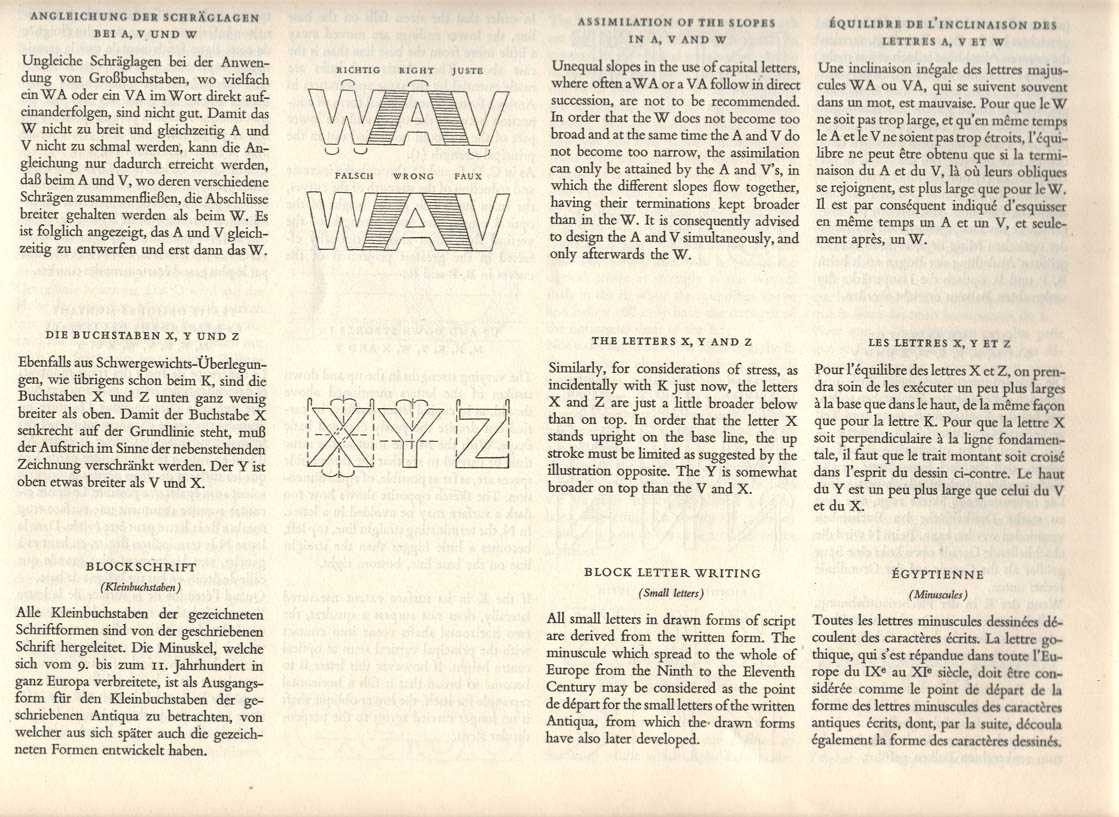
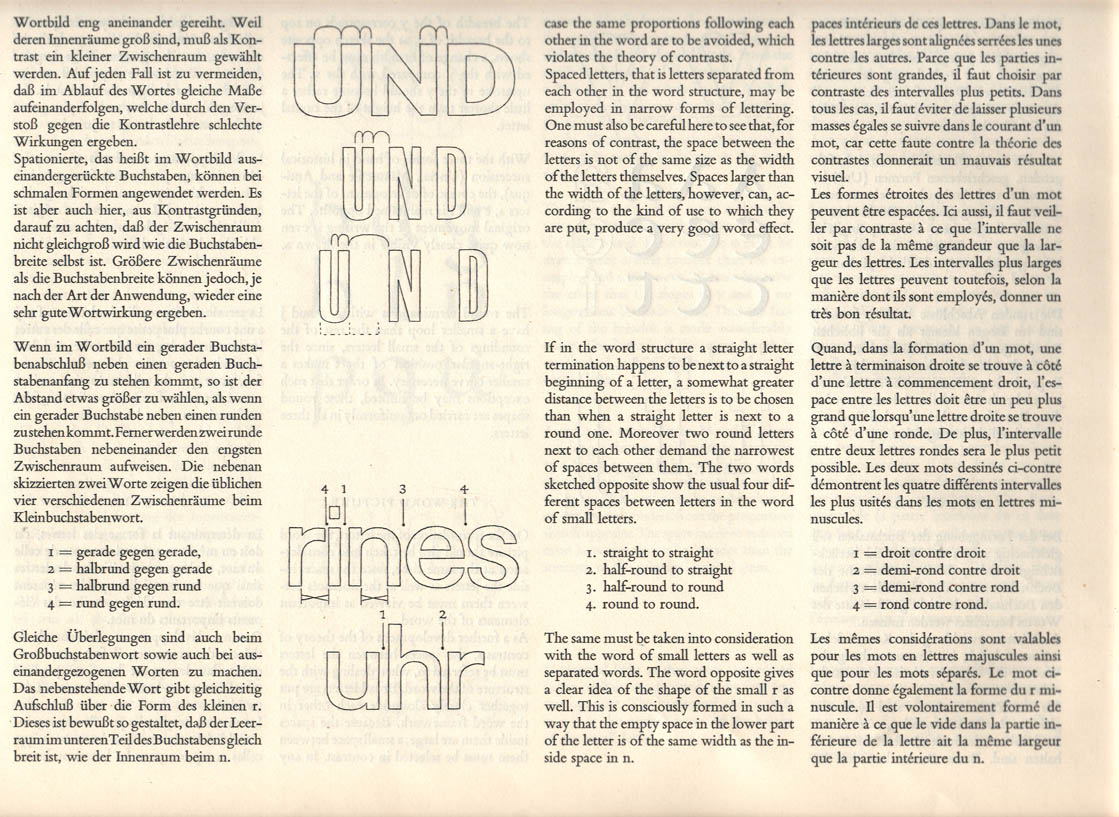
Lettering _Elementary Foundations

Die Gezeichnete Schrift / Lettering / Les Caractères Dessinés
Elementare Grundlagen / Elementary Foundations / Principes Élémentaires


...

04/10/2007

Jean François Porchez: métro type

Parisine, a Parisian Type

There are two common approaches to typeface design. The first is to design a new typeface to your personal taste, following your own rules or restrictions, and distribute it either through a type distributor or directly. The second is to work for a client on a commission. The latter method offers more financial security and an opportunity to design a typeface following a narrow design brief, suggested by the client or governed by the client’s needs. Technical, historical or design considerations are all difficult to imagine if you design a typeface for your own use.
Differences
After designing typefaces for newspapers, it came as an interesting challenge to create a typeface for signage, for a medium other than paper. Unlike typefaces designed for small sizes, for poor quality paper and printing, which factors push the designer to reinforce certain parts of letterforms, typeface characters made for signage need to be cleaner and more minimal in their form. A purity of expression is needed.
Book typefaces from the Renaissance remain our archetype for most fonts created with paper as a final medium in mind. For signage, the purity of the Greek and Roman inscriptions seems historically suitable. Their open counters, proportions, and simplicity in the case of Greek capitals, need to be followed when designing typefaces for monumental inscriptions.

Design brief
The way the Métro started its life strongly influenced signage in the stations. In the early days, a number of commercial companies ran the different Métro lines. This is one of the reasons that the inscriptions varied enormously, from enamel signage to big ceramic station nameplates. Sans serifs were mostly used for big signage, and on the carriages, letters were painted in a style appropriate to the carriage design. Early on, it was Art Nouveau forms. At the time, most of the transportation process was done manually by rail workers, from the sale of individual tickets, to the semi-automatic door closing. Later, the national rail network, the RATP, took over.
It was not before the sixties, however, that the overall signage question was taken into account by the RATP. After the Second World War, at the time of the industrial boom and automisation, the network was extended into the surburbs and signage became a key factor. The situation was similar for buses. Most of the direction signs on both sides of the buses were done by lettering artists, always in caps, in various condensed sans serifs. This method was used on the buses until the end of the seventies, when Helvetica was chosen as to replace these methods.
In the early seventies, the RATP set up a study group, including Swiss type designer Adrian Frutiger. He was asked to design a ‘special variation’ of his Univers typeface. The variant was introduced in 1973 to replace the twenty alphabets previously in use by the network. Later, Frutiger wrote: ‘It is the special charm of the Paris Métro that its applied aesthetics are not stamped with a uniform style. Forms of expression of the past hundred years, such as the beautiful Art Nouveau portals, are in many cases still present. This variety should be preserved as well as possible, as an enrichment of the scene. The joining together of typographical elements into a new harmonious order was a task requiring a certain degree of restraint so far as the creation of new forms was concerned.’
His recommendation was to stick to capitals to fit better with existing signs and with the historical roots of the Métro. The new alphabet was used only when the text needed to be updated or the station renovated. Soon after, around 1973 to 1975, Frutiger's Roissy, a preliminary version of the typeface called Frutiger, was created for the new Aeroport Charles de Gaulle. This time, without historical constraints, he used caps and lowercase instead of the all caps RATP alphabet. Frutiger wrote: ‘We rejected an elongated condensed face because of its loss of legibility. The similarity of the shapes of all letters, due to central vertical lengthening, has an unfavourable effect.’ I remember clearly from my childhood the strikingly contemporary effect of the new airport with its signage on yellow.

It was not until the early nineties that the RATP started to move towards using caps and lowercase signage concepts, which provide better word shapes and contrast. This formula was adopted to improve legibility. For future signage, which was intended to be applied to all the transportation systems, from the Métro to buses in the French capital, a typeface family was needed. The RATP president decided to select from one of the typeface families already in used by the RATP. These included the Adrian Frutiger all-caps face based on Univers, the RER, Albert Boton’s thin, rounded, all-caps face designed specifically for the new fast Métro in the late seventies, Gill Sans, used in recent years for corporate identity and official communication, and Neue Helvetica, chosen by designer Jean Widmer, which was used for bus signage system from 1994.
Neue Helvetica was selected because of its general availability and compatibility with various computer programmes. This seeming advantage actually produced problems. Potential users mistakenly used Helvetica instead of Neue Helvetica. Because of the various widths, weights, and letterforms, the corporate guidelines have never been successfully implemented. Early on in the testing process, the people involved came from very different areas. (The signage, from basic stickers to illuminated boxes or classic enamels metal plates needed a range of production methods.) Non-typographers could not comprehend the consequence of choosing the wrong version.


Why a specific typeface?
The people in charge of the signage system quickly understood that Neue Helvetica did not work well, because of its width and standard narrow spacing. The station name ‘Champs-Elysées Clémenceau’ is obviously longer than the station name ‘Nation.’ Historically, the name plates had been sized according to the length of the name of station or the design style of the station itself. At stations where a lot of information had to be displayed (various connections and ways out), the name plate was smaller than in stations where less information was needed. After some tests in real conditions with strict rules, the final modular system permitted a modest level of adaptation of the name plate size: a real problem in France, which stubbornly resists standardisation.

Due to the problems described, the idea emerged for a specific RATP typeface with some Helvetica characteristics, and with the same legibility, but more economical in width. The rail network asked several of the larger typefonderies to provide quotations for a ‘unique’ Helvetica to belong to the RATP, to avoid multiple versions of their signage applications. They wanted to give away the typeface in one way or another to their suppliers. However, typeface designs are intellectual property. Neue Helvetica is used by the RATP, and many others. RATP could not buy and distribute a font licence, nor could a designer be asked to create a ‘RATP Helvetica’, we call that piracy.

Most companies approached responded with quotations based on large corporate multi-site licences, without dealing with the design problems described. Instead of doing this, I asked for a meeting and brought some typeface research. I had made just two station name signs, directly on Illustrator, as we do when we design a logotype or a lettering job. I built some comparisons with Helvetica in reverse (signages are usually white on dark). We went out into a dark corridor, I put two A4 samples on the wall, asked to make the corridor as dark as possible, then started my explanation about the legibility of the open faces, horizontal openings, and various widths. The RATP team was surprised by the result and became very interested. We decided to sell the project in-house as a kind of Helvetica, which it is not at all, but possibly one for non-typographers! This earlier conclusion proved the enthusiasm of the team in charge of the signage. The typeface was adopted, and cut its supposed family links with Helvetica soon after the idea was accepted. Parisine, a name created by the RATP team, was born in the summer of 1995. The development of the new bold and a true italic took a couple of months and the two series were delivered to the RATP in January 1996.
In 1995, was involved in the organisation of the annual August conference of Rencontres Internationales de Lure, in the south of France. One of the speakers that I invited, American digital type designer Sumner Stone, visited me at Malakoff in Paris before the Rencontres. We discussed the Parisine project and he seemed pleased by its humanistic touch. Sumner has strong interests in inscriptions and calligraphy. He has been at the head of the type department of Adobe and managed the Trajan, Lithos, and Myriad projects, among others. We had an impassioned discussion about the importance of the capitals in inscriptions, their spacing, the difficulty of fitting them with lower case lettering. He told me about his experiments on this, which I found enriching, and which allowed me to confirm some of my own views. At that time, he was thinking about an all caps sans serif face for the Cecil H. Green Library, at Stanford University, which he went on to create as Basalt. (The reference to Parisine has been acknowledged by Sumner Stone in an exhibition of his work at the Ditchling Museum in Sussex, United Kingdom in 2000.)

Concept
In his Essay on typography, which compared two type displays, one in square narrow heavy letters, the other in purely ‘Gillesque’ caps, Eric Gill wrote: ‘A return to mere legibility seems desirable even if the effect be less striking. To this end it is necessary to study the principles of legibility; the characters which distinguish one letter from another, the proportion of light and dark in letters and spacing.’ Later on, he wrote: ‘Many engineers affect this style of letter, believing it to be devoid of that ‘art-nonsense’ on the absence of which they pride themselves.’ The style of letter to which he refers is close to what Helvetica represents, to my eyes. I have thought for a long time about this idea of contrast that helps legibility. Humanity is the key when you design typefaces, and this is particularly true for public signage, where no special marketing effect is nee, just a service to the public. Type designer Ladislas Mandel perceives typefaces as cultural items, writing: ‘Our first glance of any written work is always cultural. If the perceived forms are contained in our cultural references, we recognise them, we ‘own’ them like the reflection of our own image and we open large the doors to their intelligence.’ With Gill, Mandel and Frutiger share a concern for the act of perception as a key factor. (...)
[Ler mais...]

(...) Today, the typeface family is not only used by the RATP for signage, maps, and communication, Parisine is available to the public in all of its versions. But, strange as it seems to me, the Parisine ‘standard’ became the most successful of all of my typeface families. I say strange because I always questioned myself about the novelty of it. Why is Parisine so appreciated? Perhaps because it is a synthesis between a Germanic Helvetica and the too Latin style of its creator? [Ler mais...]
__________________________________________________________________________________________
Jean François Porchez teaches typography at Ensad, France and Reading University, England.

[Ler mais...] > http://stbride.org/friends/conference/hiddentypography/images/MetroHelveticaSign.jpg

...

xx, Signature Style


Design Feature - xx, Signature Style - TAXI Design Network
Write to the Editor
by Alicia Tan

The substance of style is a reservedly intimate entity to a designer. Like the appreciation of fine wine or music, it is really dependent on the individual’s personal taste. Style and design work in tandem but when critiquing the issue of good or bad, it is the design element rather than style which is held accountable. In contrast to the earlier stages of graphic design, the design discpline today is highly reliant on technology and thrives on competition; hence the essence of a personal style will distinguish one designer’s portfolio from the superfluity of talents in the industry.

The Evolution of Design

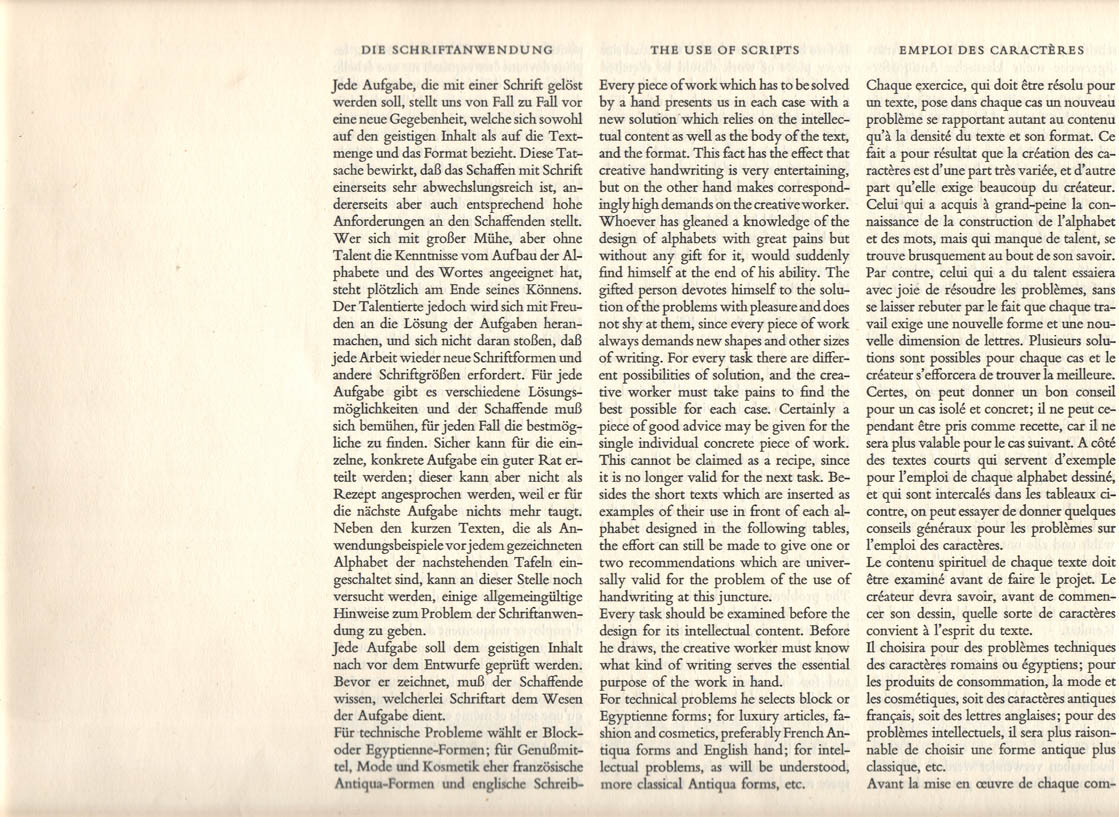
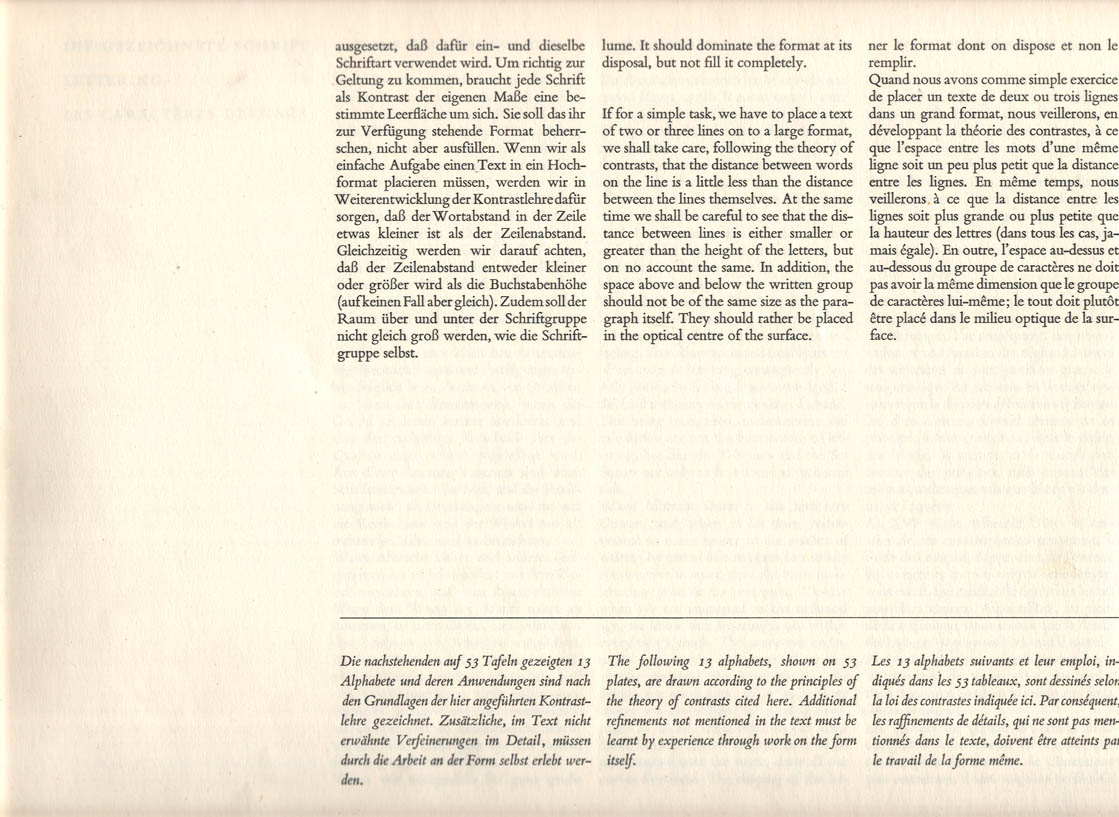
(Paul Rand Miscellany cover for Design Quarterly and him on a "Think Different" poster in his later years. Images and text courtesy of Wikipedia ®)
The term ‘graphic designer’ was first coined in the 20th century, and much like the fine art of the same period, it was a reaction against the decadence of typography and design of the late 19th century. The hallmark of early modern typography is the sans-serif typeface which was highly inspired by vernacular and industrial typography of the 19th century.

Bauhaus had a massive role in the beginnings of design and till today, many works can be seen as ‘Bauhaus-inspired’ due to their overwhelming influence on designers. The emigration of the German Bauhaus School of Design to Chicago in 1937 brought a "mass-produced" minimalism to America, introducing a new wave of modern architecture and design. Renowned and legendary designer, Paul Rand, took the principles of the Bauhaus and used them to popularize advertising and logo design, applying a European minimalist approach while pioneering the subset of graphic design known as corporate identity.

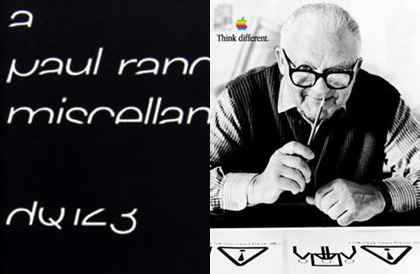
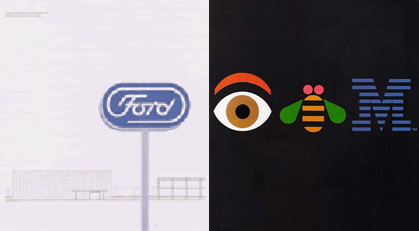
(Eye Bee M poster designed by Rand in 1981 for IBM and the unimplemented logo designed by Rand for Ford Motor Company. Images and text courtesy of Wikipedia ®)

The reaction towards the importance of graphic design was nonetheless never as severe as it is today nor was it an ideal choice of vocation.

Hand Skills: Dexterity of the Past. Computers: Necessity of the Present Day.

The phenomenal personal computer which made its presence in 1984 was particularly influential in design as it marked the end of reign of the Bauhaus designer - the era in which hand skills were paramount and practitioners were considered artists. As with every great change, response was divided, with some embracing it whilst others denying it. Between the the period of DIY and the sudden accessibility of technology, it was inevitable that the design industry had been affected, albeit in a positive way.

The ABC logo, developed by Paul Rand, has been in use since 1962 and remains unmodified to this day. Rand said that he designed it for durability, function, usefulness, rightness, and beauty. The typeface used for the famous logo is a simple geometric design inspired by the Bauhaus school of the 1920s. Image and text courtesy of Search-this.

The 90’s had seen developed countries shift away from actual production-based to focus on the concept of ‘ideas’. Design benefited from this change and began to explore its roots in a wider context. Innovation was the new hot term which saw design striving to be more innovative not only in its products but also in its business elements of strategizing and planning. Innovation, it seems, is still fresh as ever.

This profession, once uncommon and rarely chosen, witnessed the surge of many young talents who wanted a piece of the pie in the growing robust industry. In the age of digital media, communication is imperative and instant feedback from users has been made possible through the web, something which is rare in print. This new medium is the ground which brings the design community together and the designers closer to its suitors.

Inherently, the tide is changing yet again. No man is an island and collaborative work these days is a common vision most graphic designers welcome. Why so? Because through collaboration, designers can land bigger deals from clients and learn different skills from fellow counterparts, something no school can teach.

Rife Competition. The Drive to Success.

Graphic design has projected a tremendous growth rate. With the viability of the economy, more people require the skills of designers and competition for these positions continue to be fierce as new talented and competent freshies are popping up as rapidly as the snap of a finger.

As more businesses look to the Web for information and as the entertainment market expands, there is definitely an escalation in demand for graphic designers.

In this fast-paced society, graphic designers have to rise to the occasion and results are needed almost instantaneously. Today’s young designers do not need to worry about apprenticeship or being bogged down by a certain style. They are open to freelance, to experiment and to hopefully perform some technological mastery to wow critiques and clients. Perseverance and nurturing a personal style is the key to stay on top in this highly aggressive industry.

The Crux of the Issue: Relevance of a Personal Style.

Jon Bon Jovi, famously adored for his raspy cooing intonations whilst Jim Carrey, fondly remembered for his slapstick comical humor, have both carved a persona for themselves, which is highly recognized by their fans. Likewise, designers too need to find their character and nurture a style by which people can identify or closely associate themselves with. (...) [Ler mais...]> Design Feature - xx, Signature Style - TAXI Design Network
...