21/03/2009

Um Século em Cartaz

>
Lúcia Bergamaschi Costa Weymar
Universidade Federal de Pelotas e Pontifícia Universidade Católica do Rio Grande do Sul.

Resumo: Este artigo resulta de uma proposta pedagógica acerca de design gráfico.
A proposta em questão é de caráter teórico e prático e propõe uma retrospectiva a propósito de alguns designers nacionais e internacionais que contribuíram para a história do design gráfico moderno e pós moderno. A partir desta teoria, os alunos projetaram cartazes homenageando tais designers e o resultado deste projeto, bem como a metodologia e a avaliação de todo este processo, estabelece o desenvolvimento deste texto.

Palavras-Chave: história do design gráfico moderno e pós-moderno 1. cartaz 2. ensino da comunicação visual 3. comunicação e cultura 4.

(...)
2.2) Design Gráfico Pós-Moderno
2.2.1) Origens do Design Gráfico Pós-Moderno

Segundo Cauduro, na metade dos anos 1960 a monotonia e pasteurização do design ocidental começam a ser contestadas com Odermatt & Tissi em Zurique e Wolfgang Weingart em Basel: “(...) alternativas não-dogmáticas e mais descontraídas (retorno à ornamentação, ao simbolismo, ao humor e à improvisação) para fugir da esterilidade das formas modernistas” (CAUDURO, 1998, p. 79) passam a ser incluídas. Para o autor, citando Keedy, design pós-moderno é reação e não rejeição ao design moderno. Os pós-modernistas reagem aos excessos racionalistas e positivistas da modernidade. Como influências para estas mudanças podem ser lembradas as novas formas de viver dos existencialistas e beatniks dos anos 1950 e hippies dos anos 1960. É importante destacar que nesse momento surge o movimento psicodélico no design americano de contracultura. Cauduro5 aponta que este estilo pode ser considerado como apropriação (como veremos adiante com Poynor) e radicalização da Op-Art: estilos revividos, história reciclada, progresso material desprezado, valorização do inconformismo, da intuição e do subjetivismo. Podemos ainda lembrar o revivalismo dos estilos vitoriano, do Art Nouveau e do Art Déco, destacando então os designers Milton Glaser e Herb Lubalin com seu autoproclamado expressionismo, onde funde tipos com pictogramas inspirados no vernacular.

2.2.2) Estética Logocentrista
A metafísica logocêntrica da presença, ou logocentrismo, é aquela posição filosófica
pela qual a fala tem sido sempre vista como sendo a única conexão verdadeira que
temos com o nosso pensamento, a escrita sendo apenas uma mera técnica para
representá-la. (Cauduro, 1998, p. 84)
Creio ser pertinente trazermos a nossa reflexão as pontuações realizadas por Cauduro
acerca do confronto de idéias entre Saussure e Derrida6 no que se refere à escrita. Saussure a
via como servil à fala, essa sim ligada ao pensar. Acreditava até que ela poderia ser maléfica
e perigosa já que muitas vezes infiel ao pensamento. Derrida, em contrapartida, definia a
escrita como um signo a mais, não apenas uma notação representativa da fala, mas uma
diferença. Ele se perguntava onde estava o perigo, porque a escrita vem sendo condenada a
uma distância, a uma invisibilidade? Cauduro avança o confronto passando então a criticar
um autor contemporâneo, o inglês McLean, que defende que o propósito do design
tipográfico é o comunicar palavras concebidas na mente de alguém, destituindo de sua
abrangência toda e qualquer imagem que não a formada por tipos, uma prática absurdamente
anacrônica em se considerando que as vanguardas do design em décadas passadas já haviam
refutado estes postulados7.
O design tipográfico pós-moderno não é excludente tal como todas as outras
manifestações das artes visuais contemporâneas, já que é abrangente e inclusivo. A condição
pós-moderna supõe que a transparência sobrevive, e em muitos casos deve permanecer, mas
não mais privilegia apenas o conteúdo verbal da estética logocêntrica, pois o estímulo à
inovação e à experimentação já é uma conquista centenária.

2.2.3) Retórica Tipográfica e Tipografia Digital
Em relação à retórica, Cauduro nos ensina que a tipografia clássica “é apenas uma das
variantes retóricas que a escrita tipográfica, ou o design tipográfico, melhor dizendo, pode
assumir na prática (...) ela não é toda a tipografia (...)”. O autor analisa que a tipografia
clássica é adequada “para manter o mito da autoridade” e conclui que “esta retórica
tipográfica da invisibilidade (...) é a face gráfica, visível, do logocentrismo”. (CAUDURO,
1988, p. 95)
O autor afirma que hoje
é o computador que propiciará o rejuvenescimento, uma vez mais, do design
tipográfico, como preconizado pelos futuristas, dadaístas e surrealistas, permitindo o
retorno do jogo e do acaso, fatores anteriormente oprimidos pelos funcionalistas do
design, mas que agora emergem, e são cada vez mais valorizados, graças aos
incríveis resultados gerados pelas novas tecnologias digitais de criação e produção
visuais
(Cauduro,1998, p.99).
Em outro artigo, Cauduro classifica a tipografia digital hoje em: fontes bitmap ou
pixeladas, fontes techno, fontes revival ou retro, vernaculares, informais e idiossincráticas,
grunges, randômicas, híbridas, fontes de artifício e dingbats. (CAUDURO, 2002, p. 1-1)
(pp. 5)

referencias:
5 CAUDURO, 2000, p. 127-139.
6 CAUDURO, 1998, p. 81-85.
7 CAUDURO, 1998, p. 81-93.

Typography as Discourse

>
McCoy, Katherine, with David Frej, 'Typography as Discourse', ID Magazine, New York, March/April 1988, pp. 34-37.

The recent history of graphic design in the U.S. reveals a series of actions and reactions. The fifties saw the flowering of U.S. graphic design in the New York School. This copy-concept and image-oriented direction was challenged in the sixties by the importation of Swiss minimalism, a structural and typographic system that forced a split between graphic design and advertising. Predictably, designers in the next decade rebelled against Helvetica and the grid system that had become the official American corporate style.

In the early seventies, Robert Venturi's Complexity and Contradiction in Architecture emerged alongside the study of graphic design history as influences on American graphic design students. Simultaneously, Switzerland's Basel school was transformed by Wolfgang Weingart's syntactical experimentation, an enthusiasm that quickly spread to U.S. schools. Academia's rediscovery of early 20th century Modernism, the appearance of historicized and vernacular architectural postmodernism and the spread of Weingartian structural expressionism all came together in the graphic explosion labeled as New Wave.

Shattering the constraints of minimalism was exhilarating and far more fun than the antiseptic discipline of the classical Swiss school. After a brief flurry of diatribes in the graphic design press, this permissive new approach quickly moved into the professional mainstream. Today, however, the maverick has been tamed, codified into a formalistic style that fills our design annuals with endlessly sophisticated renditions. What was originally a revolution is now an institution, as predictable as Beaux Arts architecture. It is the new status quo-- the New Academy, as Phil Meggs calls it.

Determining whether New Wave is postmodernism or just late Modernism is important in understanding new work today. New Wave extends the classical Swiss interest in structure to dissections and recombinations of graphic design's grammar. Layered images and textures continue the collage aesthetic begun by Cubism, Constructivism, and Dada. But the addition of vernacular imagery and colors reflects postmodern architecture's discovery of popular culture, and the reintroduction of the classic serif typefaces draws on pre-20th century history. Taken as a whole, however, New Wave's complex arrangements are largely syntactical, abstracting type and images into baroquely Modern compositions.

The New Academy's knowing, often slick iterations have left some graphic designers dissatisfied. As a result, long neglected design elements, such as semantic expression in form, text and imagery, are beginning to resurface. Much of this recent work steps outside the lineage of Bauhaus/ Basel/ New Wave, and not surprisingly, some of its practitioners come from fine art, photographic or literary backgrounds rather than graphic design training.

When one looks for experimental typography today, what one finds is not so much new typography, as new relationships between text and image. In fact, the typography so celebrated over the past ten years of structuralist dissection is disappearing. The look and structure of the letter is underplayed and verbal signification, interacting with imagery and symbols, is instead relied upon. The best new work is often aformal and sometimes decidedly anti-formal, despite the presence of some New Wave elements. Reacting to the technical perfection of mainstream graphic design, refinement and mastery are frequently rejected in favor of the directness of unmannered, hand-drawn or vernacular forms-- after all, technical expertise is hardly a revelation anymore. These designers value expression over style.

Here on the edges of graphic design, the presence of the designer is sometimes so oblique that certain pieces would seem to spring directly from our popular culture. Reflecting current linguistic theory, the notion of "authorship" as a personal, formal vocabulary is less important than the dialogue between the graphic object and its audience; no longer are there one-way statements from designer. The layering of content, as opposed to New Wave's formal layering of collage elements, is the key to this exchange. Objective communication is enhanced by deferred meanings, hidden stories and alternative interpretations.

Sources for much current experimentation can be traced to recent fine art and photography, and to literary and art criticism. Influenced by French post-structuralism, critics and artists deconstruct verbal language as a filter or bias that inescapably manipulates the reader's response. When this approach is applied to art and photography, form is treated as a visual language to be read as well as seen. Both the texts and the images are to be read in detail, their meanings decoded. Clearly, this intellectualized communication asks a lot of its audience; this is harder work than the formal pleasures of New Wave.

Much new typography is very quiet. Some of the most interesting, in fact, is impossible to show here because of its radically modest scale or its subtle development through a sequence of pages. Some is bold in scale but so matter-of-fact that it makes little in the way of a visual statement. (One designer calls these strictly linguistic intentions "nonallusive" typography.) Typefaces now range from the classics to banal, often industrial sans serifs. Copy is often treated as just that-- undifferentiated blocks of words-- without the mannered manipulations of New Wave, where sentences and words are playfully exploded to express their parts. Text is no longer the syntactic playground of Weingart's descendants.

These cryptic, poker-faced juxtapositions of text and image do not always strive for elegance or refinement, although they may achieve it inadvertently. The focus now is on expression through semantic content, utilizing the intellectual software of visual language as well as the structural hardware and graphic grammar of Modernism. It is an interactive process that-- as art always anticipates social evolution-- heralds our emerging information economy, in which meanings are as important as materials.

fonte:  High Ground Design.

20/03/2009

Classification Vox-AtypI

Polices de caractères

Des commentaires de polices très sérieux, enrichis de définitions pour les néophytes et d'illustrations pour vos beaux yeux ?
Cliquez à votre guise :

Banco
Baskerville
Bodoni
Caslon
Cheltenham
Cochin
Didot millimétrique
Galliard
Garamond
Garamont de l'Imprimerie nationale
Gauthier de l'Imprimerie nationale
Gill
Grandjean de l'Imprimerie nationale
Helvetica
Jaugeon
Marcellin Legrand de l'Imprimerie nationale
Luce de l'Imprimerie nationale
Optima
Peignot
Times
Univers
Vendôme
Walbaum


Familles de caractères
Classification Vox-AtypI
C'est Francis Thibaudeau qui, le premier en 1921, eu l'idée de regrouper certains caractères présentant des caractéristiques communes établies selon certains critères formels principalement liés aux empattements. Il classa ainsi les caractères en quatre familles : bâton ou antique, didot, égyptienne, elzévir.

Cette répartition, insuffisante pour concerner l'ensemble de la production graphique, fut complétée en 1954 par Maximilien Vox avec une répartition en neuf familles tenant compte de l'architecture générale des lettres et de détails historiques : manuaire, humane, garalde, réale, didone, mécane, linéale, incise, scripte. Il fallut attendre l'addition de deux familles, fractur et orientale, proposées par l'AtypI (Association Typographique Internationale) en 1962, pour parvenir aux onze familles de la classification Vox-AtypI.

Cette classification, adoptée par toute la profession du monde des Arts et Industries graphiques, permet de faire entrer dans une de ces familles tous les caractères actuellement sur le marché ou, tout au moins, par le principe d'addition de définitions, de pouvoir décrire tous les caractères.

Bien entendu certains caractères dessinés pour le titrage ou pour des amusements typographiques peuvent en être exclus.

Manuaires
Humanes
Garaldes
Réales
Didones
Mécanes
Linéales
Incises
Scriptes
Fraktur
Orientales

[Ler mais...]

Affaire-esperluette, 2003. Tous droits réservés.

18/03/2009

Tipografía vernacular:

La revolución silenciosa de las letras del cotidiano

Vera Lúcia Dones*

Este artigo pretende fazer um registro da tipografia
vernacular e de algumas expressões gráficas de letristas
anônimos da região metropolitana de Porto Alegre. A
complexidade de estéticas gráficas visuais dos últimos
50 anos testemunha a superação de modelos universais
da tipografia aplicada à comunicação gráfica. As reflexões
que seguem procuram evidenciar a proliferação
de sincretismos e da união de elementos gráficos díspares
nas construções imagéticas, as formas autênticas e
arcaicas permeiam o sofisticado e tecnológico do design
gráfico atual.
Em se tratando de legibilidade da tipografia aplicada
ao design gráfico, sabemos que na perspectiva moderna,
a legibilidade era tida como o resultado de uma série
de atributos e critérios fixos aplicados ao texto, com
base em normas criadas a partir de pesquisas óticas-funcionais,
as “regras” tipográficas. Esses referenciais
não consideravam as conotações culturais dos caracteres,
e tampouco entendiam o design como parte de
uma cultura cada vez mais complexa e diversa. A partir
dos anos 70 os textos pós-estruturalistas invadiram
algumas escolas norte-americanas de design, dentre
elas a Cranbrook Academy, vindo a constituir-se em
rico material de reflexão e sustentação teórica para os
projetos gráficos dos alunos. Segundo Lupton (1991), os
primeiros passos no caminho do design pós-estruturalista
se deve à escola de Detroit. As peças gráficas eram
produzidas como signos visuais e verbais e explorados
através de seus múltiplos significados.
A desconstrução tipográfica passou, igualmente, pela
Escola da Basiléia com Wolfgang Weingart. Voz
alternativa na Suíça dos anos 70, Weingart defendeu o
enfoque experimental na tipografia. Suas experimentações
tipográficas de alguns letristas na região metropolitana de Porto
Alegre, e de que forma o imaginário da cultura popular
serve de inspiração à criação dos designers gráficos.
(pp.109-110)

* Graduada em Artes Plásticas, Mestre em Comunicação
Social, Centro Universitário Feevale.


fonte:
Actas de Diseño 1. Facultad de Diseño y Comunicación. Universidad de Palermo. pp. 23-164. ISSN 1850-2032

16/03/2009

Designingwithtype.com

by James Craig

Designingwithtype.com is a web site devoted to the art and appreciation of typography. It offers a unique typographic resource for students, educators, and professionals, showcasing talent from around the world. [Ler mais...]

(...)
There are many excellent ways of teaching the history of graphic design. One of the better ways, though this is not always possible, is to integrate the history of graphic design with the other arts — painting, literature, music — and with major political and cultural events of the time. The following timelines are from James Craig's book Thirty Centuries of Graphic Design and cover just a few of the highlights between 30,000 BC and 1990 AD, the year book was published.

1000 BC – 500 AD

500 – 1300

1300 – 1400

1400 – 1500

1500 – 1600

1600 – 1700

1700 – 1800

1800 – 1900

1900 – 1920

1920 – 1940

1940 – 1960

1960 – 1990


(...)

Prehistoric Pictograph
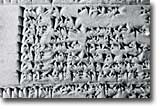
Cuneiform, ca 3100 B.C.
 
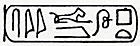
Egyptian Hieroglyphics
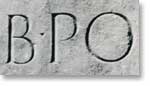
Early Latin. ca.700 B.C.
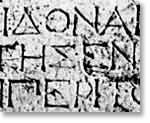
Ionic Greek adopted in 403 B.C.
Trajan Inscription A.D. 114
[Ler mais...] > Timelines 

(...)
Items of Interest
The following is an assortment of all things typographic. It will be of interest to anyone who loves typography and is curious about the history of graphic design and the evolution of the printed word. 

08/03/2009

Terminology


"Ascenders
The strokes of letters b, d, f, h, k, l which project above the level of the 'x' height of the typeface"

"Standing Type
Type or formes that have been printed but not broken up and distributed back into the case."

"Wrong Fount
A letter of the wrong size or design erroneously getting into a setting."

[Ler mais...] > letterpress london college of communication

07/03/2009

Typography Glossary

Explore the world of typography and digital type through words, definitions, and mini-tutorials on using fonts in desktop publishing. Take a look at the terminology of type and fonts, especially as it applies to desktop publishing.

These are just the briefest of definitions of Typography terminology. For more detailed descriptions see the individual page for each term.

Alpha Index of All Desktop Publishing Terms


"Type Designer
By Jacci Howard Bear, About.com

Definition: A professional type designer is highly skilled and knowledgeable about the anatomy of typefaces as well as type history. Type designers create new typefaces from scratch or based on existing typeface designs. Today, with the ready availability of font editors and type design software, anyone can modify fonts or create new ones and can be considered type designers, although the best typefaces are still generally created by dedicated, professional type designers.

Also Known As: font designer

Examples: The history of typography generally begins with Gutenberg and the development of moveable type, but it has its roots in handwritten letterforms -- whether transcribed with pen and ink or chiseled in stone -- for they are the basis of type designs."


Typography Primer

Typographic Terms at the end of this document...

[Ler mais...] > Adobe

06/03/2009

Ariel Malka

chronotext is a growing collection of software experiments exploring the relation between text, space and time

beyond typography
The potential locked up in text at the digital age is huge: en route for some unvisited territories...

news
The iPhone is asking to become the main experiment channel for chronotext this year and the steering committee is likely to accept the request...

The experiments representative was quoted earlier, before fainting:

What a relief after years behind a desktop computer screen, stuck inside Java and hardly visited... People are going to interact physically with us, touching, tilting, shaking us... God!


© 2003-2009 ariel malka


05/03/2009

Hannes von Döhren


Hannes von Döhren was born in Berlin/Germany in 1979. After completing his studies (graphic design) in 2005, he worked in an advertising agency in Hamburg/Germany. Since 2007 he has been working as a freelancing graphic designer in Berlin, which allows him to spend some of his time developing fonts as well.

[Ler mais...] > hvdfonts.com